Every creator I know complains about the same thing: the sharpest conversations in their niche happen live inside an X Space, and then they're gone. If you're tired of watching good audio evaporate the moment a host ends the session, an x space downloader is the least glamorous and most useful tool you can add to your stack this week.
This isn't about hoarding files. It's about owning the raw material your ideas are built from — the interviews, the hot takes, the client calls, the panels you hosted at 11pm that nobody can find anymore.

The Content Gold Rush Happening Inside X Spaces
Think about where the real conversations moved. Not the polished blog posts, not the edited YouTube uploads. The unscripted stuff. Founders arguing about pricing, journalists trading sourcing stories, indie hackers describing exactly how they got their first hundred users. That's where the texture is.
And it all lives in audio that plays once and disappears.
Creators figured this out faster than brands did. A solo podcaster who can't book guests suddenly has a room full of potential collaborators. A consultant can host a weekly Space and quietly build a reputation as the person who asks the uncomfortable question. The barrier to entry collapsed. What didn't collapse is the barrier to keeping any of it.
That gap is exactly where a recording tool earns its place. Not as a nice-to-have, but as the thing that decides whether six months of live effort turns into an asset or a memory.
Your Best Ideas Are Disappearing Every Time A Space Ends
The 24-Hour Disappearing Act
X Spaces are ephemeral by design. Once the host closes the room, the audio is effectively gone unless someone took deliberate steps to preserve it. Replays are inconsistent, access is limited, and even when something is technically available, it's rarely in a format you can edit, clip, or archive.
Ask yourself how many of your own Spaces you could actually listen back to right now. For most creators, the answer is somewhere between "almost none" and "I think there's a link somewhere."
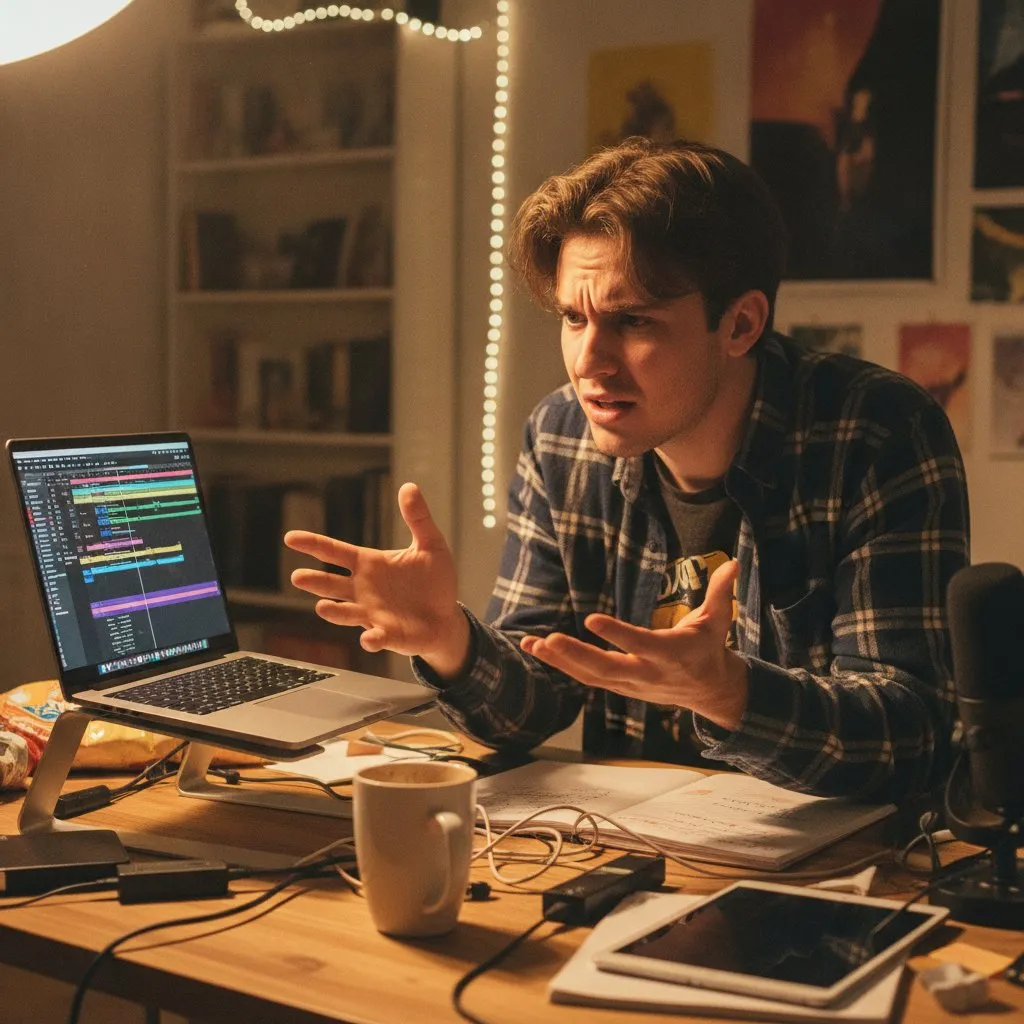
That's a strange way to run a creative business. You wouldn't write a newsletter and delete the draft before it sends. You wouldn't shoot a video and throw away the footage. Yet live audio gets treated as disposable, even though it often contains the most honest version of what you think.
What You Actually Lose
When you can't replay a session, you lose more than the file. You lose the ability to catch your own contradictions. You lose the exact phrasing you used to explain a concept that finally clicked for someone in the audience. You lose the chance to hear a guest's answer a second time and notice the part you missed while you were busy thinking about your next question.
And practically speaking, you lose the ability to quote yourself accurately. Anyone who has tried to write a recap from memory knows how fast details blur.
One Conversation, Ten Pieces Of Content
The Repurposing Multiplier
Here's the part that changes the math. A single hour-long Space is not one piece of content. It's a quarry. With a clean audio file in hand, you can cut and reshape it into a surprising number of formats.
- Audiograms — 30-second highlight clips with waveforms for X, Instagram, and LinkedIn.
- Quote graphics — pull the strongest sentence from the transcript and turn it into a static post.
- Newsletter sections — a transcript makes it trivial to build a "what we discussed this week" block.
- Short-form video — a face-cam reaction layered over the audio clip performs well on every vertical platform.
- Blog posts — expand one segment into a full article with your own commentary.
- Lead magnets — package six months of Spaces into an audio library and gate it behind an email signup.
None of that is possible without the source file. Every repurposing workflow in the creator economy starts with the same unglamorous step: get the audio, keep the audio, own the audio.
What A Good X Space Downloader Actually Does
There's a difference between a tool that technically grabs audio and a tool you can build a habit around. Reliability matters more than feature lists, because a recorder that fails on the one Space that mattered is worse than no recorder at all.
The essentials: it captures the full session, it handles long recordings without dropping chunks, it gives you a file you can actually work with, and it doesn't require you to babysit it while you're also trying to host.
Recording Quality And Reliability
Audio quality is the first thing people underestimate. A file with clipped levels or uneven volume between speakers becomes a nightmare in editing. You end up spending more time repairing than creating, which defeats the entire purpose.
Reliability comes second. Hosts get disconnected. Guests join late. A session scheduled for 45 minutes runs to two hours because the conversation got good. The tool has to survive all of that without you thinking about it.
Credits, Pricing, And Predictability
Pricing models matter more than creators like to admit. Per-hour or credit-based approaches make sense if your usage is uneven — a heavy conference month, then a quiet stretch. Flat subscriptions make sense if you're recording daily. The important thing is that you can predict the cost before you start, not after.
If you want to see how that plays out in practice, the credit packages and pricing page lays out the options clearly. For a lot of people, the deciding factor is simply whether the math works at their actual recording volume — not at some hypothetical maximum.
Manual Recording Versus A Dedicated Tool
| Aspect | Screen Recording / Manual Capture | Dedicated Downloader |
|---|---|---|
| Attention required | You must monitor the whole session | Set it and continue hosting |
| Audio quality | Depends on your system output | Captured directly from the source |
| Long sessions | Risk of crashes or dropped frames | Built for extended recordings |
| File handling | Large video files to convert later | Audio-ready output |
| Repeatability | Manual setup every single time | Consistent, repeatable workflow |
| Cross-device use | Usually tied to one machine | Works across desktop, mobile, browser |
The table isn't a knock on screen recorders. They're genuinely useful for other jobs. But using one to capture a two-hour audio conversation is like using a cargo van to deliver a letter. It works, technically, and it makes everything harder than it needs to be.
Creators Are Building Archives, Not Just Downloads
The mental shift that separates creators who compound from creators who churn is this: they treat their live sessions as a library, not as events.
"The creators who last aren't the ones with the best ideas. They're the ones who can find their old ideas six months later."
An archive does things a single download can't. It lets you notice patterns in what you talk about. It lets you go back to a guest two years later with a genuinely informed follow-up. It lets you build a searchable backlog that becomes the foundation for a course, a book, or a paid community.
You can see how this plays out across different workflows on the Twitter Spaces download page, which covers the mechanics of saving sessions properly rather than scrambling after the fact.
Privacy, Permission, And The Ethics Of Recording
This is the part people skip, and it's the part that matters most. Recording a space is not the same as owning everyone in it.
Common-sense rules that keep you out of trouble:
- Announce it. Tell the room you're recording at the start, not at the end.
- Respect the no. If a guest asks not to be recorded, that request wins.
- Be careful with sensitive topics. Personal stories, medical details, legal matters — ask twice.
- Don't republish without consent. Clipping someone's unguarded moment for engagement is a fast way to lose trust.
- Store it responsibly. Backups are good. Publicly dumped folders with private conversations are not.
None of this is complicated. It's just courtesy applied to a new format. Transparency about recording is what makes recording acceptable in the first place — and the creators who handle it well get invited back to more rooms than the ones who don't.
Picking A Tool Without Wasting A Month Testing
There are more options than you need, and most comparisons online are written by people who never actually recorded anything longer than ten minutes. Skip the endless research phase. Test against your real use case.
A short checklist that cuts through it:
- Does it work on the device you actually host from?
- Can it handle a session longer than two hours without failing?
- How many steps between "session ends" and "file on my machine"?
- What happens if your connection hiccups mid-recording?
- Is the pricing transparent at your usage level?
- Can you retrieve your files later, or are they locked in a dashboard?
For cross-platform specifics, the localized setup pages are genuinely helpful — there's a French download guide, a Dutch download page, and a Turkish download page covering Chrome, Android, and Windows installations. If you're already set up and just need to reach your account, the login portal gets you there. And if something breaks at 2am before a big recording, support is reachable through the contact page or, for German-speaking users, the German support page.
The Workflow That Actually Sticks
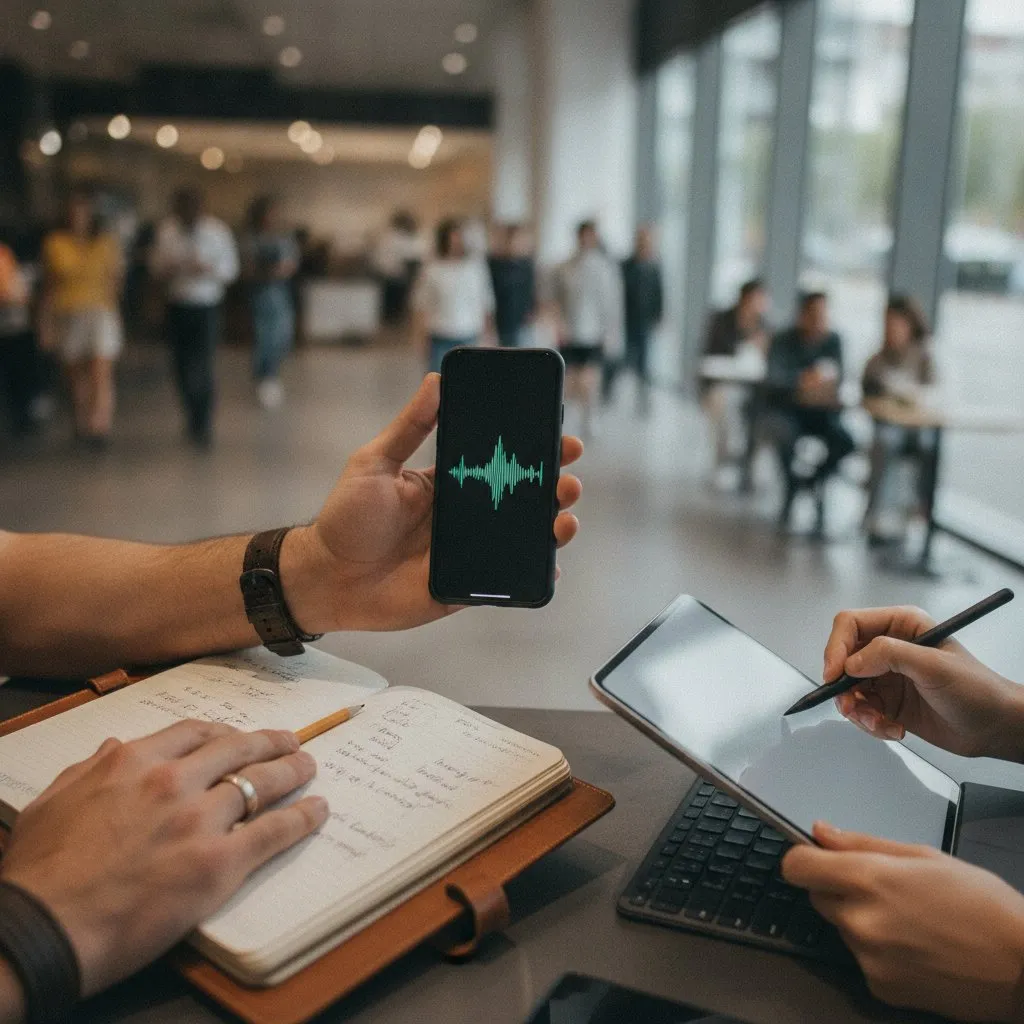
Tools don't fail because they're bad. They fail because they don't fit into a routine. So here's a routine that survives contact with a busy week.
Before you host, start the recording. Ten seconds of setup, done before anyone joins. While the session runs, forget about it entirely — that's the whole point. When it ends, download the file immediately, while you still remember which parts mattered.
Then spend five minutes writing three messy bullet points about what stood out. Not a summary. Just markers, so future-you can find the good section in twenty seconds instead of listening to the whole thing again.
Name the file with the date and topic. Drop it in a folder that syncs. That's it.
Three months of that habit produces something genuinely valuable: a personal archive of conversations you can search, quote, and repurpose. Six months of it and you have a body of material most creators in your niche simply don't have, because they let their best hours disappear.
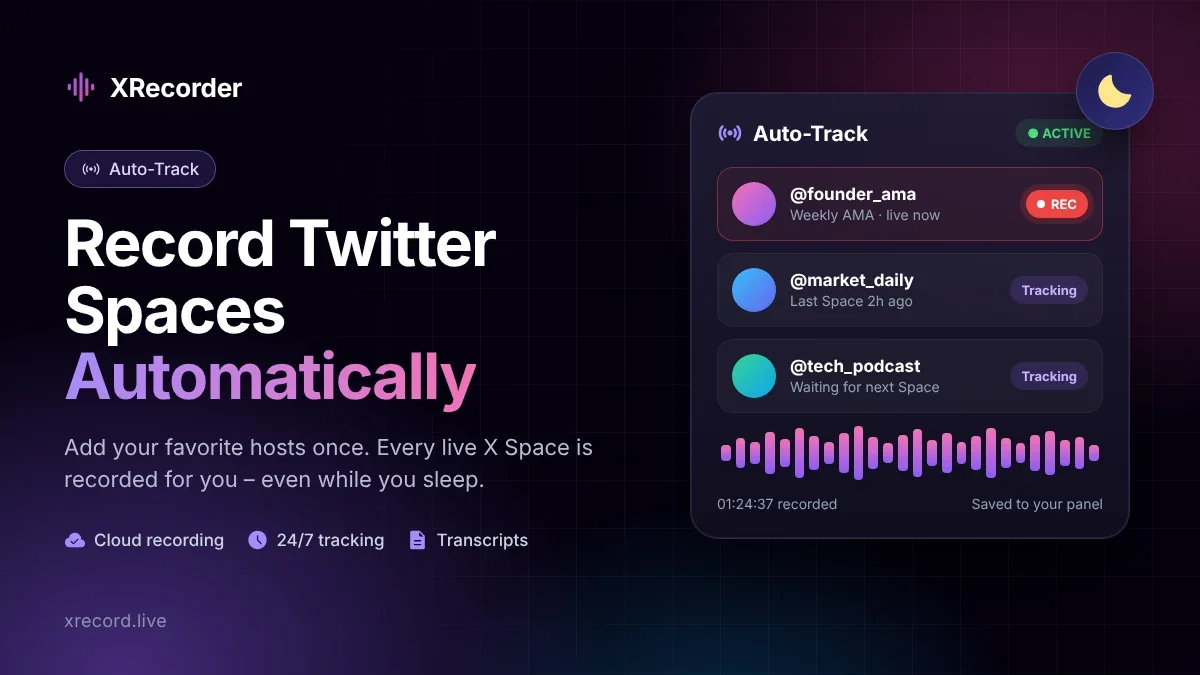
The XRecorder blog digs into the tactical side of this — repurposing, archival, workflow — and the general guides section is where to start if you're new to live audio capture entirely.
Why This Matters More Now Than A Year Ago
Live audio on X has matured. The early novelty phase is over, and what's left is a format that produces real, substantive conversation for audiences that actually care about the topic. That's the opposite of a dying medium. That's a channel with unusually low competition and unusually high attention.
Which means the creators who win the next year aren't necessarily the ones with the biggest rooms. They're the ones who treat each room as raw material instead of a one-off event. The recording is the difference between a good night and a growing library.
It's a small change. One button, one habit, one folder. But it quietly changes what's possible six months from now — because you'll have something to work with instead of something you vaguely remember.